
AI Visibility Is Becoming Market Dependent

IgniteStack
For years, international search has followed a relatively familiar playbook.
Build authority centrally. Localise content. Translate where necessary. Adapt keyword targeting by market. Maintain technical consistency across regions.
The assumption underpinning all of this was relatively simple. Search engines may behave slightly differently across countries, but the underlying rules remain broadly consistent.
AI search may challenge that assumption. It's still early and the industry doesn't yet have years of data to prove this conclusively. But the evidence we're seeing increasingly points towards recommendation behaviour becoming far more fragmented geographically than many brands currently expect.
One of the most interesting developments we're starting to observe is that visibility does not appear to behave consistently across markets. The brands, sources and narratives surfaced in AI-generated answers can vary significantly depending on language, geography and the information ecosystem surrounding a query. That distinction matters.
Traditional search engines primarily retrieve and rank content. AI systems increasingly synthesise information from multiple sources before generating a response. In doing so, they must determine which organisations, publications, experts and brands are trustworthy enough to include in an answer.
The inputs influencing those decisions are unlikely to be identical in every market.
That probably shouldn't come as a surprise. The information environment surrounding a query in Germany is fundamentally different from the information environment surrounding the same query in the UK. Different publishers. Different communities. Different review ecosystems. Different cultural signals. Often entirely different conversations taking place online.
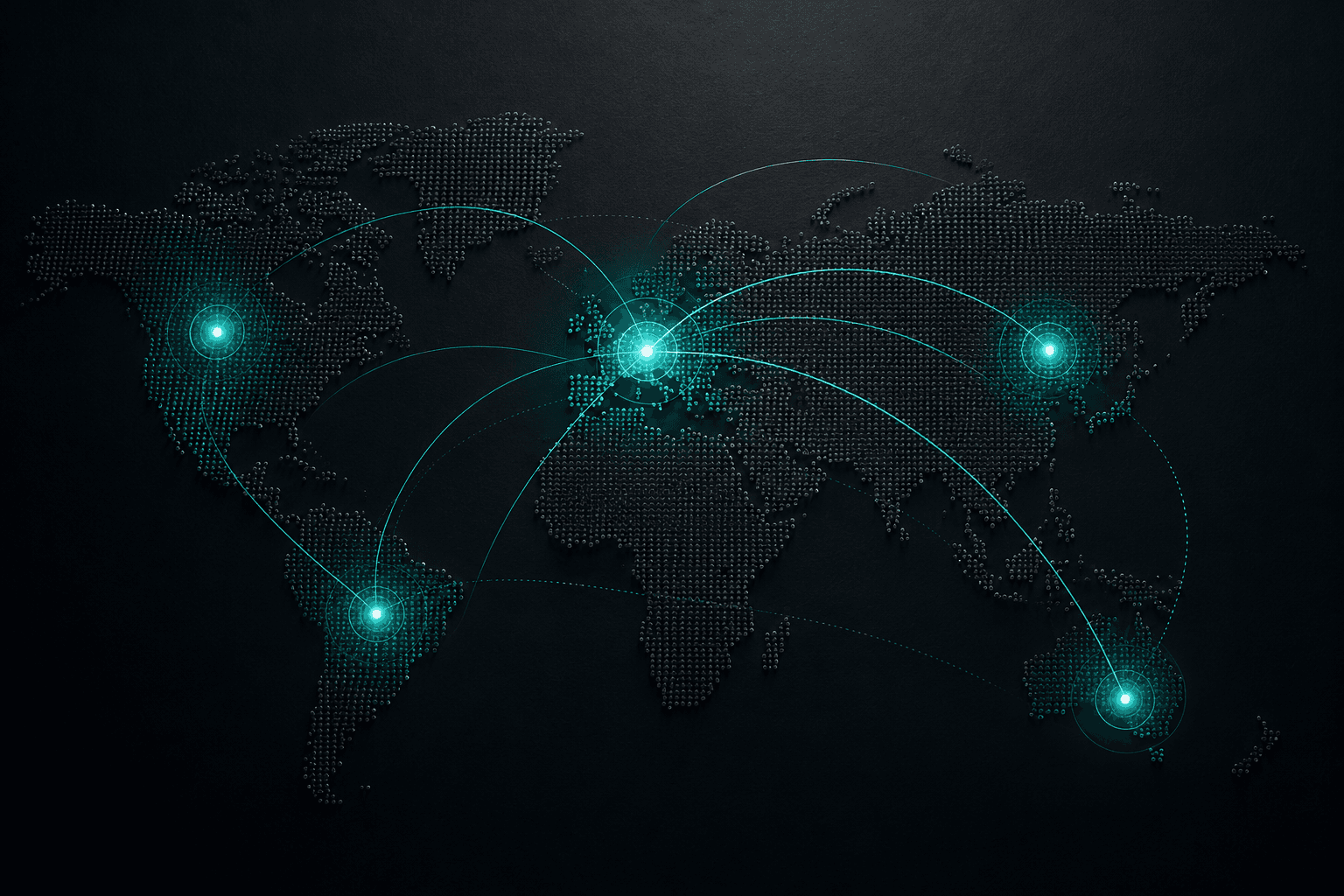
A brand operating across the UK, Germany, Japan and Brazil is not entering the same information environment four times. It is entering four distinct ecosystems, each with its own sources of influence, trust mechanisms and market dynamics.
As a result, visibility may increasingly become market dependent.
The signals contributing to recommendation inclusion in one country may have considerably less influence elsewhere. A publisher carrying significant authority in one region may hold little relevance in another. A creator ecosystem that shapes buying decisions in one market may barely register in a different geography.
What's particularly interesting is that this doesn't necessarily mean the strongest global brands will always win. In some markets, established authority may continue to dominate recommendation behaviour. In others, local relevance, specialist expertise or community trust could carry far more weight. If that proves true, smaller regional brands may have opportunities that simply didn't exist in traditional search.
The challenge is that most organisations are not currently structured to think about AI visibility this way. Search teams tend to operate globally. PR teams often work market-by-market. Social and creator activity sits somewhere else entirely. Brand teams have their own priorities. AI recommendation systems do not care about those organisational boundaries.
They are evaluating the total information environment around a brand. That creates a challenge many international organisations are not yet equipped to address.
Most AI visibility measurement today remains highly aggregated. Brands often assess performance globally or at a broad regional level. That's understandable because the tooling is new and teams are still trying to establish baselines.
The problem is that aggregate visibility can hide what is actually happening underneath. A company may appear highly visible overall while being largely absent from AI recommendations in strategically important markets. Equally, strong performance in one geography can mask weaknesses elsewhere.
That is not simply a reporting issue. It is a strategic one. The real question is no longer whether a brand is visible in AI search.
The more important question is where that visibility exists, why it exists and what factors are influencing recommendation behaviour in each individual market. This is where AI visibility begins to move beyond traditional SEO.
Search remains an important foundation, but recommendation systems introduce additional layers of influence. Brand positioning, media presence, creator ecosystems, review environments, reputation signals and narrative consistency all become part of the equation.
We often talk about AI visibility as though there will eventually be a single playbook. The reality may be much messier. Recommendation systems are influenced by language, culture and information sources in ways that search rankings never were. The closer we look across markets, the harder it becomes to believe that one optimisation framework will work everywhere.
Understanding those differences is likely to become one of the defining challenges for global marketing teams over the next few years. Brands will need to understand how recommendation behaviour differs by country and language. They will need visibility into local source ecosystems. They will need to analyse prompts at a market level rather than relying on global averages. They will need to understand which competitors are being recommended regionally and why.
Most importantly, they will need to recognise that success in one market does not guarantee success in another. None of this means the fundamentals disappear. Strong brands, credible sources, useful content and clear positioning still matter. But the way those signals are interpreted may increasingly depend on where the question is being asked.
That is what makes this area so interesting.
The next phase of AI visibility is unlikely to be defined by a single universal optimisation framework. It will be defined by understanding how recommendation systems interpret brands differently across markets and adapting accordingly.
The organisations that develop that capability early will gain a significant advantage. Because the future of AI visibility may not belong to the brands with the best global strategy.
It may belong to the brands that best understand how AI recommendation behaviour changes from one market to the next.

Want to find out more on AI Visibility?